

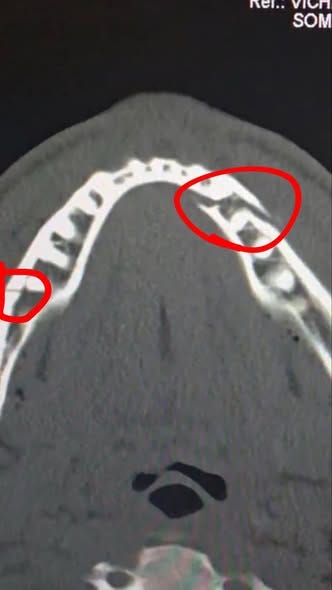
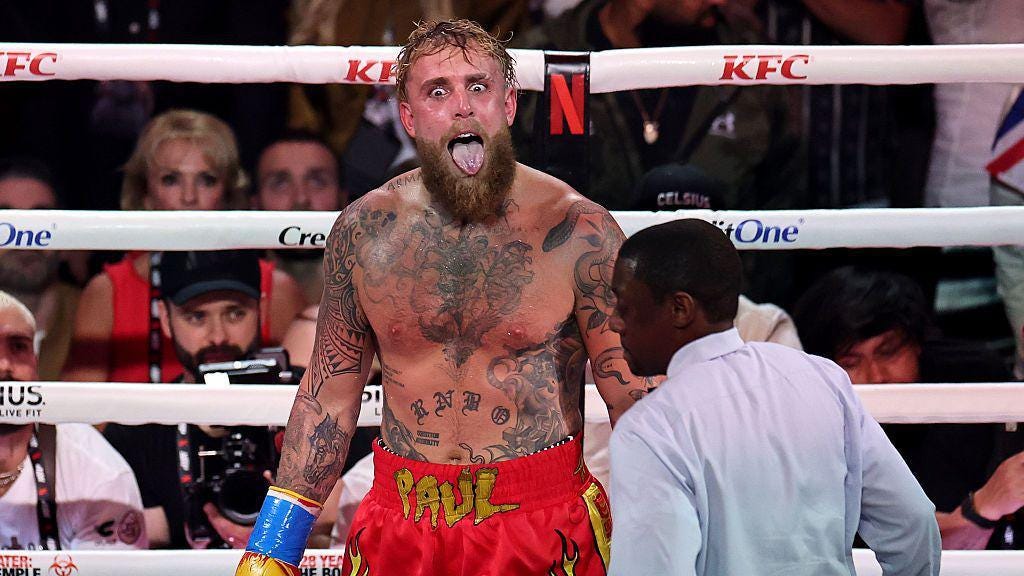
First: about Jake Paul’s injury
As of my last reliable medical knowledge, reports described Jake Paul as having a double jaw fracture (i.e., fractures involving two distinct regions of the mandible, or mandible + maxilla). Exact imaging details have not been publicly released, so we should treat this as a reported injury, not a fully characterized one.
That said, “double jaw fracture” in a professional fighter is inherently serious, and here’s why.
What makes a “double jaw fracture” severe?
1. Biomechanics of the mandible
The mandible is a ring bone (like the pelvis).
👉 If it fractures in one place, it is very common for it to fracture in a second location.
Two fractures often mean:
One direct impact site
One counter-force fracture elsewhere (e.g., condyle, angle, parasymphysis)
This significantly complicates stability.
2. Common high-risk fracture patterns
Severe combat-sport fractures often involve:
Angle + parasymphysis
Body + condylar fracture
Bilateral condylar fractures (especially dangerous)
Condylar involvement is particularly serious because it affects:
Jaw opening
Occlusion (bite alignment)
TMJ function
Facial symmetry
3. Functional consequences
A double fracture can disrupt:
Occlusion → permanent bite misalignment
TMJ mechanics → chronic pain, locking, clicking
Masticatory strength → reduced punch absorption
Neurologic function → inferior alveolar nerve injury (numbness)
For a boxer, occlusion and jaw stability are critical.
4. Treatment severity
Many double fractures require:
Open reduction and internal fixation (ORIF) with plates and screws
Possible maxillomandibular fixation (jaw wiring) for weeks
Prolonged non-chew diet (6–8+ weeks)
Plates may remain permanently.
Could this end his fighting career?
Yes — it is possible, but not inevitable.
Here’s how to think about it:
Factors that favor return to fighting
Clean fractures with good alignment
No condylar involvement
No chronic TMJ dysfunction
Full restoration of occlusion
No persistent neuropathy
Adequate bone healing density on CT
Many fighters have returned after mandibular fractures.
Factors that threaten career longevity
🚨 These are red flags:
Bilateral condylar fractures
Malocclusion that cannot be fully corrected
Chronic TMJ pain or locking
Re-fracture risk due to stress risers around plates
Loss of punch resistance (jaw fractures lower future fracture threshold)
Once a jaw has fractured twice, future fractures occur at lower force.
A hard truth about boxing & jaw fractures
From a sports-medicine perspective:
A previously fractured mandible is never as resilient as an uninjured one, even with perfect healing.
This doesn’t mean retirement is mandatory — but it raises the risk profile permanently.
Bottom line
A double jaw fracture is severe because it compromises structural stability, occlusion, and TMJ mechanics.
Yes, it could end a fighting career, depending on:
Fracture location
Surgical outcome
Long-term TMJ function
Many fighters return — but each subsequent hit carries greater risk.
As a former licensed ringside physician in Nevada, I would not sign off on an application for Jake Paul to fight again. The risk is too great.


